When he found Christ, his family declared he was dead
Yasser Eric puts his trust in the One who died on the cross and rose from the dead. Today, he tries to help Christian converts reduce their risk of being persecuted.
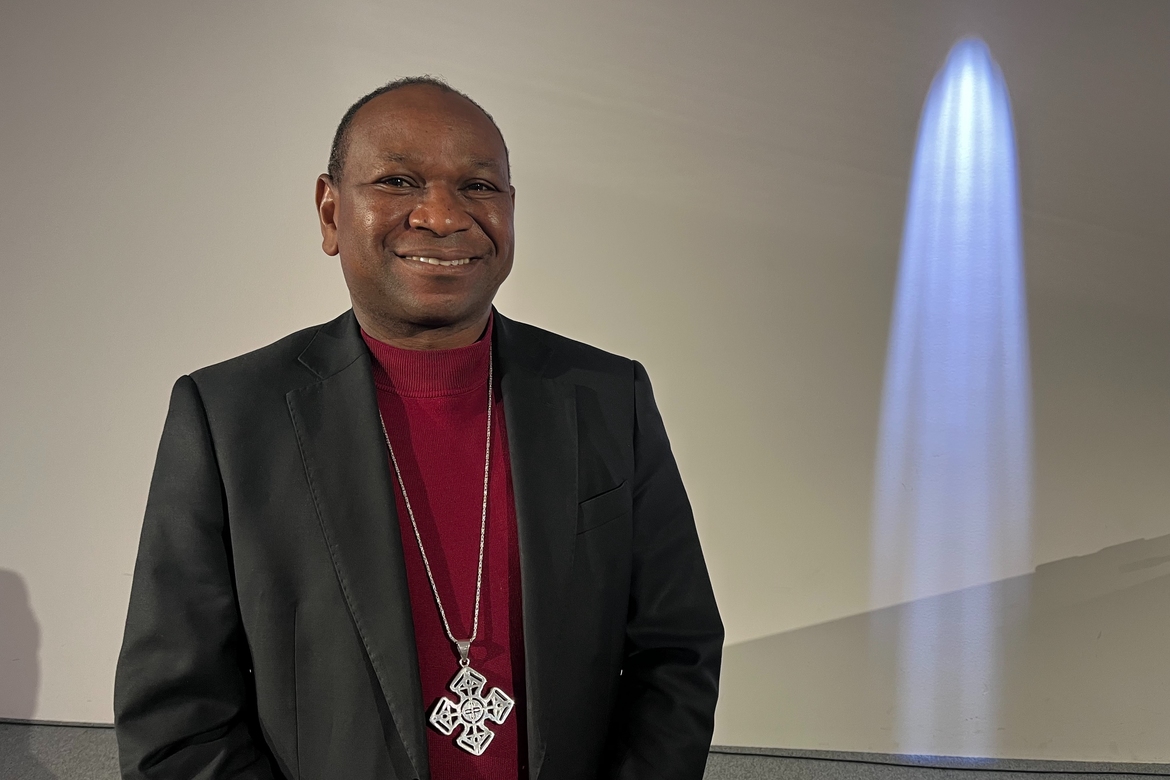
After Yasser Eric became a Christian, his family held a funeral to declare him dead. Standing by his own symbolic grave, Yasser Eric heard a voice–the voice of Jesus.
Yasser Eric grew up in a powerful and extremist Muslim family in Sudan. He encountered Jesus when two Christians from Egypt prayed for a boy who was miraculously healed. Due to his now Christian faith, Yasser Erics father declared him dead.
Today, thirty five years later, the outcast Yasser Eric serves as an Anglican bishop for converts from Muslim backgrounds.
“Since the day I began to believe in Christ, my life has been filled with pain, loss and fear, but also with a profound and unwavering experience of God’s nearness. Jesus has shown himself repeatedly as my light, my safeguard and my source of strength,” the bishop tells Stefanus Alliance’s magazine.
He adopted the name Yasser Eric when he was cast out and forbidden to use his Muslim family name.
Radical and powerful
Yasser Eric was born in 1972 into a radical and powerful Muslim family in Sudan. His grandfather, Hassan al Turabi, helped establish the Muslim Brotherhood and played a key role when sharia was introduced in Sudan.
His father enrolled him in a Quran school and, on Friday, January 18, 1985, brought the twelve-year-old to a prison in Khartoum. There, the seventy-two-year-old thinker Mahmoud Mohamed Taha was executed. Taha had opposed the introduction of the death penalty for leaving Islam and was himself condemned to die.
Now the twelve-year-old had to witness the execution of a man condemned for apostasy.
“My father told me that this would happen to anyone who turned away from Islam,” Eric recalls.
He grew up with hatred toward both Christians and Jews. The word Christian was deeply negative to him, associated with the West and with colonialism, he explains.
That hatred surfaced clearly when, at age fifteen, he found himself in class with a Christian boy, Zekarjah, from South Sudan.
“I told my friends that we had to kill the Christian Zekarjah, who had no chance at all to defend himself when we attacked him. He hovered between life and death when we stopped beating him. I walked away from the assault as a proud Muslim,” Eric says.
Uncle imprisoned
In 1989, one of his uncles, himself a deeply conservative Muslim, became a Christian. He was imprisoned, dismissed from his position, shunned by his community and threatened to be killed. His wife divorced him, and his children were taken from him.
“I will never forget the trial,” Yasser Eric says. When the judge told my uncle that if he died as a Christian he would end up in hell, my uncle replied:
“I am not afraid of hell, and I do not want to go to the paradise you describe. I want to go where Jesus is. That is where I belong.'"
“To hear an uncle speak with such courage moved me deeply. I thought, either he had found the truth, or he had lost his mind. But deep inside, I sensed that the faith in his fearless testimony was real.”
Yasser Eric explains that his uncle’s experience became important for his own spiritual journey. One day in 1990, he sat beside the hospital bed of his young cousin, who was so sick the doctors believed he would die, when two Coptic Christian missionaries came to pray for the boy.
“I pulled my hand away when I saw the tattooed crosses on their wrists. I did not want them there. But I also did not want to offend these strangers, so I told them they could pray and then leave.”
Hearing them pray made a strong impression on him.
“They prayed to God the way I am speaking to you right now. They prayed as if the boy were their own child. I would rather have prayed for fire from heaven to fall on the two of them. Instead, they came with love.”
As they said amen, the boy opened his eyes for the first time in four weeks.
“I thought that if these people believed in God, then I needed to find out who I believed in,” Eric says.
God is love
Yasser Eric spoke with the two men until early morning. They explained that the greatest miracle was not the boy’s recovery, but that God can change the hearts of people, because God is love.
“It was the first time I heard God and love in the same sentence. When we heard the morning call to prayer, they asked if I believed in Jesus. I replied yes and prayed, 'If you are real, I ask you to enter my life.”
But when Yasser Eric told his family that he had become a Christian, he was rejected.
“All contact was cut. My father and grandfather declared me dead. They made a coffin and held a symbolic funeral for me.”
He would be interrogated and put in prison several times, in 1994 and 1995.
“What frightened me most was being held in an underground cell for seven weeks, without light and completely isolated. The darkness challenged me deeply. Yet in the midst of suffering, the words of the Bible became living to me, 'The Lord is my light and my salvation. I felt the presence of Jesus. He gave me comfort, peace and strength when everything else had been taken away.”
The voice of Jesus at the grave
After Eric was released, he realized that not only he was in great danger, but everyone he had contact with was also at risk – especially those who had converted.
“We were under surveillance. I made the painful decision to leave the country, just as my uncle had done back in 1990. But before I boarded the plane, I made one last trip to my village. I could not visit my family, but in the darkness I went to my grave. No one was there, yet I felt a hand on my shoulder and heard a voice. No one was there, yet I felt a hand on my shoulder and heard a voice say, ‘Your grave is empty. My grave is empty as well.’ I understood this to be the voice of Jesus.”
Eric went on to study theology in Kenya and Germany, and became a Lutheran pastor. Twenty years ago, after he had taught at a location in Egypt, a South Sudanese pastor approached him with tears in his eyes.
“It was Zekarjah, the boy we had attempted to kill. I saw the scars across his body. It was an agonizing moment. I felt guilt and shame and could not even ask for his forgiveness. Zekarjah explained that ever since the attack and my hatred for him, he had prayed for me. I realized that to be able to love someone who hates you, we need Jesus,” Eric says, concluding:
"In our darkest moments, both my uncle and I encountered a light that the world could not extinguish. I am deeply grateful that the Lord carried me, and that he gave me the hope that only faith in Christ can offer.”
Orginially written by Johannes Morken and published in MAGASINET STEFANUS 7-2025, translated from Norwegian.
Warns against glorifying martyrdom
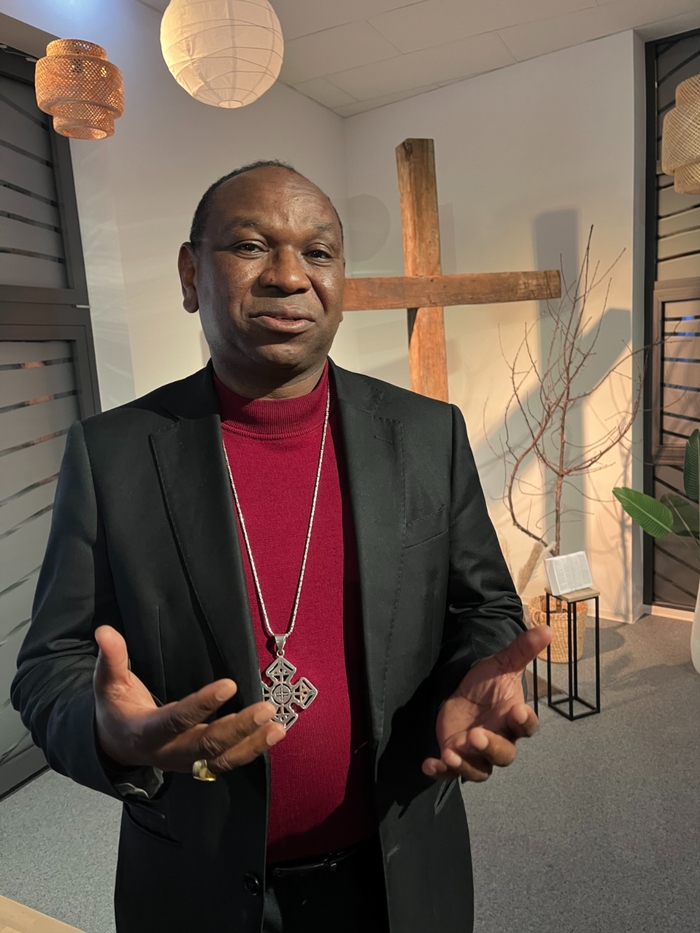
On his travels in Africa and the Middle East, Bishop Yasser Eric meets many Christians who are persecuted. But he rejects the idea that all converts who face persecution are targeted because of their faith in Jesus.
“Converts who speak openly about how terrible Islam is will be persecuted for that reason. If a Muslim asks you if you believe in Muhammad and you answer no, you will be persecuted because you have offended Muhammad, not because you follow Christ. Early on, I too spoke very negatively about Muhammad, Islam and Muslims. But I came to understand that if we offend Islam, the persecution that follows is not for the sake of Christ,” Yasser Eric says.
Now, he tries to help converts reduce the risk of persecution.
“Jesus said persecution will come. But we are not meant to escalate it.”
He believes this marks the difference between Christian martyrdom and martyrdom in Islam:
“As Christians we are not saved by our actions, we are saved only through the blood of Jesus. Jesus transformed my life. Therefore we must not glorify martyrdom. I am willing to go to prison for Christ, but not for making offensive remarks about Muhammad.”
“My children know that each trip I make to the Middle East could be my last. I avoid traveling when the risk is too great. Every time I return home, I hold my children tightly. I am willing to risk my life for Christ, but only if there is no other way,” says Yasser Eric.
About Yasser Eric
- Born in Sudan, into a very conservative Muslim family
- Became a Christian and fled the country
- March 10, 2024: consecrated as bishop in the Anglican cathedral in Kigali, Rwanda
- Bishop in the global Anglican church for converts from Muslim backgrounds
- Responsible for converts in 80 countries, from West Africa to the Middle East and from Central Asia to Indonesia
- Based in Korntal, Germany