Imaan stood up to extremism and rights violations in Pakistan. She is paying the price, in prison
The human rights lawyer Imaan Mazari (33) has not let fear keep her from taking action against Pakistani extremism and abuses of power. Since January, she and her husband Hadi have been in prison.
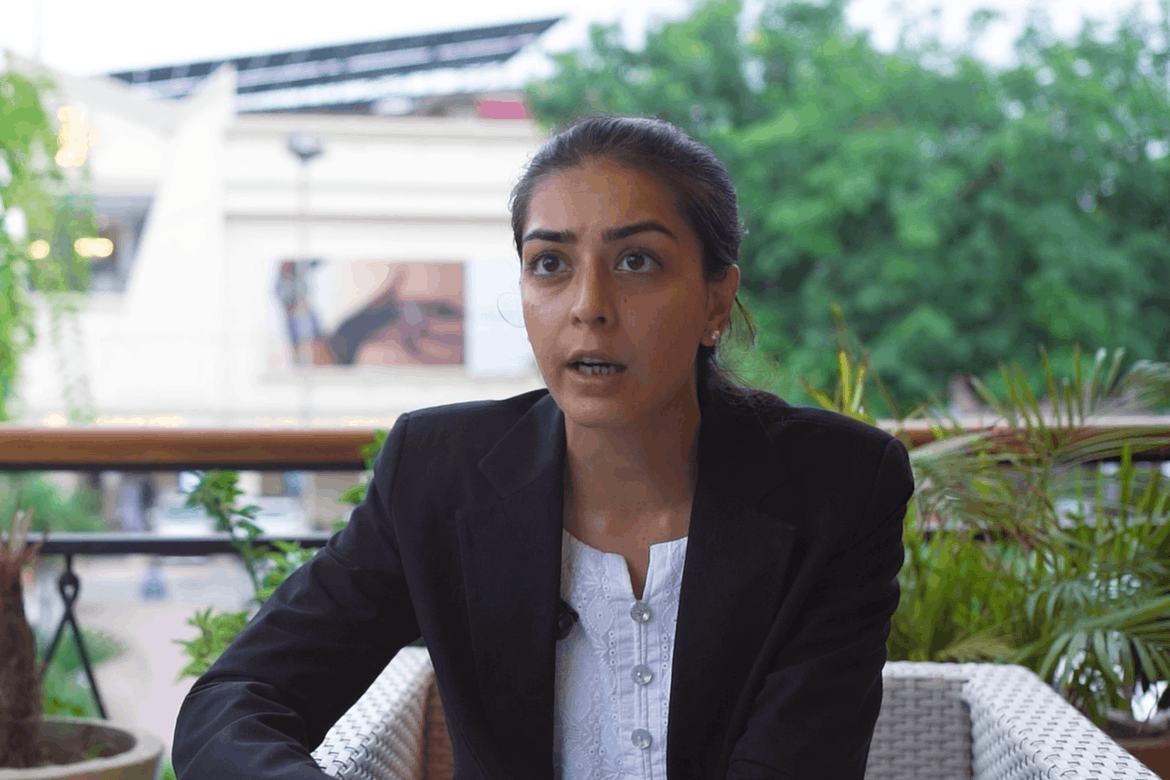
The following is a letter by her friend and colleague, Wagma Feroz, in Pakistan.
I have seen people close to me falsely accused of blasphemy. That is why I know that fear does not end with the accusation; it stays with you. That experience is one of the reasons I have always wanted to work for inclusion and freedom of religion or belief. For me, these are not abstract ideas. They are about the lives of real people, their families, and their communities. They are accused simply because they hold a different faith.
This was the starting point for my documentary, Faith Without Fear: Voices of Hope. I wanted to look beyond the headlines and ask what freedom of religion or belief actually means.
In Pakistan, conversations about religious freedom quickly become polarized. They are often reduced to debates about blasphemy laws, minorities, and accusations of blasphemy. The people at the centre of these issues disappear from the conversation.
I believe films can reach people who may never take part in an interfaith dialogue or read a policy report. A film can cross boundaries, enter homes and classrooms, and make it easier to start difficult conversations. A film can make people willing to listen to a story before they are ready to enter a debate.
I began by interviewing religious leaders from different communities. I wanted to highlight the quiet work being done to build acceptance and coexistence. Some were understandably cautious about speaking openly about the risks and challenges related to religious freedom in Pakistan, so I allowed them to focus on the positive: dignity, inclusion, and the role they play in bringing communities together.
Their voices were important because I did not want to portray Pakistan solely through the lens of conflict and intolerance. I wanted to show people who are working to build bridges.
But something was missing. If I was going to speak honestly about religious freedom, I also needed someone willing to speak openly about the obstacles.
That is why I interviewed the human rights lawyer Imaan Zainab Mazari.
Imaan has worked on difficult human rights cases involving enforced disappearances and vulnerable individuals accused of blasphemy. While the religious leaders spoke about the possibility of coexistence, Imaan spoke directly about the barriers: the fear of blasphemy accusations and what she sees as the flaws and dangers of Pakistan's blasphemy laws.
What struck me was not only what she said, but her willingness to say it.
She knew these were sensitive issues and that speaking openly could have consequences. She had already been arrested twice. Speaking up for human rights resulted both in 2023 and 2024 that she was accused of terrorism.
Yet I never felt that fear dictated what she could or could not say. For me, it was important to document her courage as well.
Her perspective also made me rethink freedom of religion or belief. It is not only about whether people are free to practise their faith. It is also about what happens when someone is accused of offending another person's religious beliefs. Does the accused receive a fair investigation? Can they find a lawyer willing to represent them? Can that lawyer speak freely? Can a judge make a decision based on evidence, free from social or religious pressure?
Imaan's own situation has made these questions even more relevant. Since I filmed her, she has paid a literal price.
On January 23, Imaan and her colleauge Hadi Ali Chatta were arrested on their way to a court hearing in Islamabad. Between 2021 and 2025, they had used the microblogging platform Twitter, now known as X, to criticise the military's conduct in the Pakistani provinces of Balochistan and Khyber Pakhtunkhwa.
The following day, they were convicted under Pakistan's Prevention of Electronic Crimes Act. The ruling stated that their posts constituted an "anti-state narrative." Each of them was sentenced to 17 years in prison.
Their case remains ongoing. In July, the Islamabad High Court agreed to hear their petitions seeking a suspension of their sentences. Imaan has since asked the Supreme Court to take up the case as a matter of urgency. As I write this in September, she and Hadi remain in Adiala Prison.
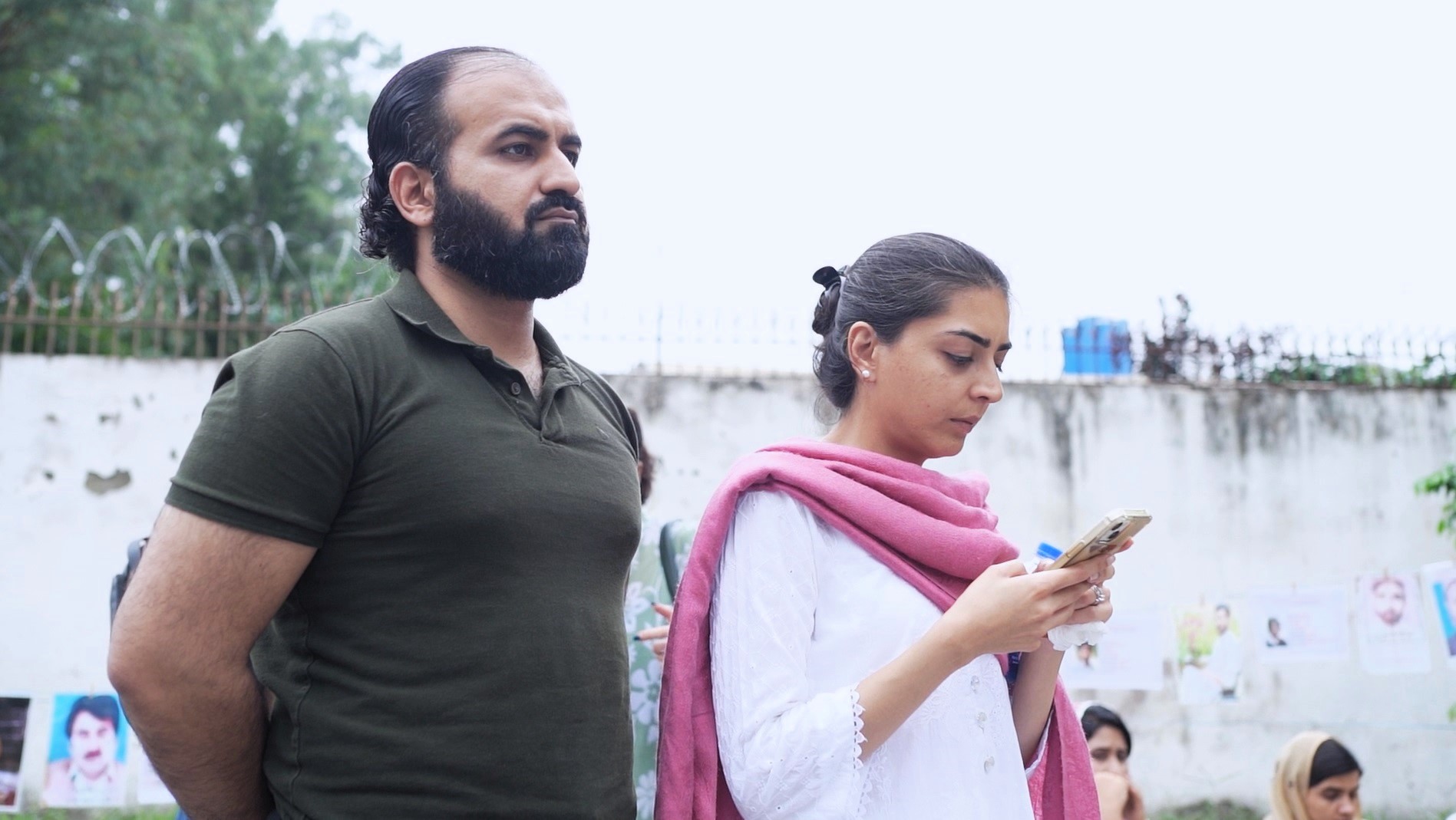
Imaan Mazari (33) with her husband and colleague, Hadi Ali Chatta. Photo: Wagma Feroz
I tried to contact Imaan in prison, but I was not granted permission to speak with her. Instead, I spoke with her lawyer and close friend, Mr. Usama Khilji, who told me:
“It took only 83 days to sentence Imaan and Hadi, in the tweets case, but it has now been more than 225 days — seven months — and their appeal against the sentence and application for suspension of sentence have still not been heard by the High Court. This shows how justice is being denied in a case already marred by violations of due process and fair-trial rights.
Although she is currently facing the consequences of her work by being in jail, before her arrest she said that her body could be imprisoned, but her ideas would remain free.”
Imaan comes from a politically prominent family. Her mother, Shireen Mazari, is a former federal minister. But that is not why I interviewed her. In fact, it raised another question: if someone as visible as Imaan, with extensive legal expertise and strong public support, can face the pressure she has experienced because of her human rights advocacy, what happens to an ordinary citizen or activist who enjoys none of those protections?
I wanted the film to present two realities: the people working for inclusion and the obstacles they face. The religious leaders showed me the work of coexistence. Imaan helped me confront the barriers.
Imaan has been willing to listen to people's stories, even when doing so has led her to prison.
I hope the film can do what films do best: encourage people to listen, question their own assumptions, and begin conversations that might otherwise be too difficult to have.
For me, interfaith harmony begins with a simple act: being willing to listen to another person's story without fear.
– Wagma Feroz
Wagma Feroz is an activist and filmmaker in Peshawar, Pakistan. She was awarded the Stefanus Prize in 2022, for her dedication and courage in promoting freedom of religion or belief.
Her short film, Faith Without Fear, can be seen here.