166 Christians in Nigeria remain in captivity, as mass kidnapping brutality is confirmed
In January, three church services were attacked by militants and a number of attendees abducted. Despite being denied access, sources now confirm that 166 people remain in captivity, including children and elderly people.
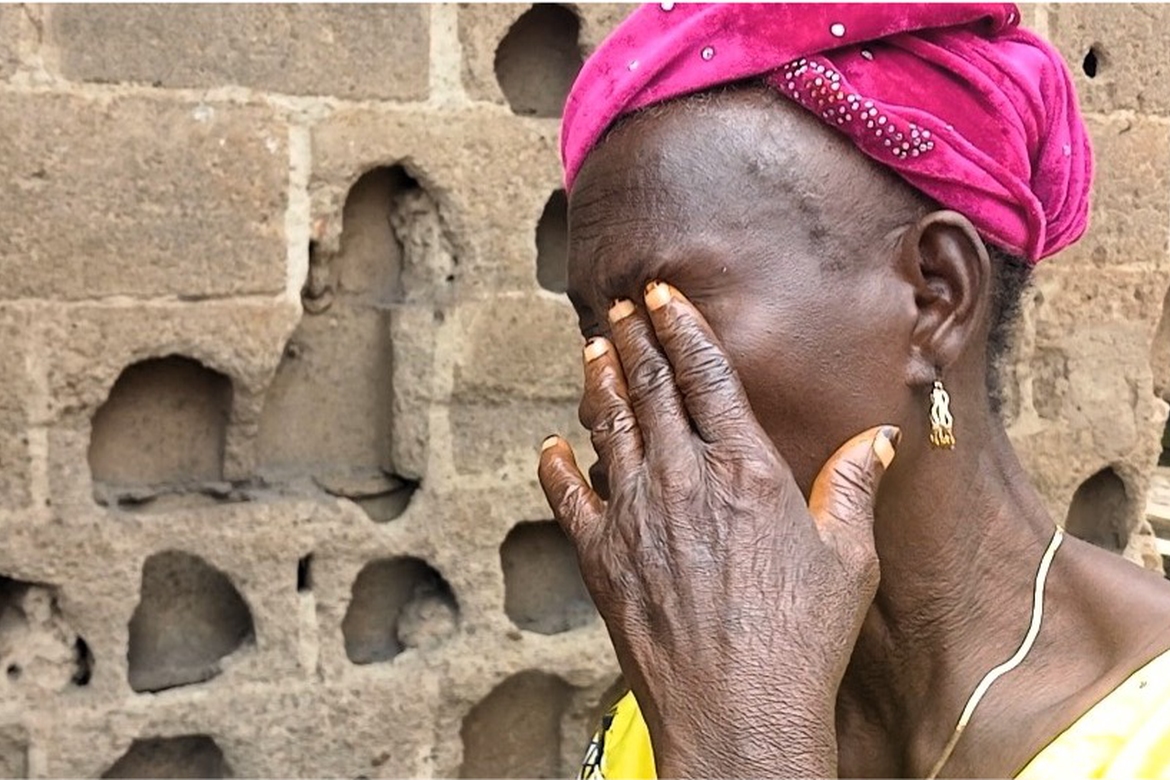
Currently, 166 people remain in captivity after a kidnapping in Nigeria, including children and elders. Picture for illustration purposes.
When alarming reports emerged that 166 Christian worshippers had been abducted from three churches in Kaduna State on Sunday, January 18, local authorities moved quickly to deny that the kidnappings had taken place. They reportedly warned villagers not to speak to the press, claiming that public attention would damage “the government’s reputation and create unnecessary attention.
The abductions have now been officially confirmed, by the human rights group Christian Solidarity Worldwide in Nigeria (CSWN).
When a CSWN team tried to enter the community of Kurmin Wali, in the Kajuru district in Kaduna State, to confirm that the abductions had in fact taken place, they were blocked by army officials. The officials cited standing orders that prohibit access and escorted the team away.
Attacked during worship
Still, CSWN has been able to speak to several local sources, who asked to remain anonymous. They told CSWN that many armed Fulani militants stormed the area, both on foot and by motorcycle, at approximately 9 a.m. on Sunday, January 18. The attack unfolded right as congregations were gathered for worship.
The militia then split into three groups, each group targeting a separate church.
“They gathered people and forced them into the bush,” one resident told CSWN. Later, the elderly women and small children were released, and another eleven people managed to escape.
In some instances, several members of the same family were abducted: thirteen of the abductees are from a single family.
Infant died two days after the attack
A CSWN team who visited Kurmin Wali on Jan. 25 spoke to Lovina Ezekiel, 35, a married woman with six children. During the attack, her husband and five of her children, the youngest of whom is five years old, were seized. Tragically, her sixth child, a nine-day-old baby, died of illness on Jan. 20, just two days after the kidnappings. She also told the team that her own father had been abducted and killed in 2025, adding, ‘with tears in her eyes,’ that she would prefer death to what she was currently experiencing.
On that same Sunday, Baptist leader Daniel Bagama was also abducted, along with his three daughters when armed attackers stormed the village of Tudun/Bussah in the Kakau area of Chikun Local Government Area in Kaduna State around 11 p.m.
Earlier in the month, on January 3, a large group of terrorists attacked the town of Kachia in southern Kaduna during the night. They opened fire on residents, injured an unknown number of people, and killed four members of the same family.
Sources confirmed that 166 individuals remain in captivity, including children and elderly people. The terrorists have demanded N250 million (approximately $179,458 USD) and 20 motorcycles for the release of the abductees.
An under-reported and under-believed crisis
Kaduna State lies just north of Nigeria’s capital, Abuja, in the central region of the country. It is part of Nigeria’s so‑called Middle Belt, a region with a mixed Christian and Muslim population, where the vast majority of deadly attacks and kidnappings occur.
For years, Fulani militia groups have carried out violence that often remained under the radar because they were not officially categorized as terrorist organizations. That changed in December 2025, when the Nigerian government designated Fulani militia among several armed groups as terrorist organizations, under the country’s new counterterrorism doctrine.
Repeated kidnappings have forced large number of residents to abandon their homes and move to safer areas. In a statement published Jan. 20, CSWN described the ongoing attacks and abductions as “a clear betrayal of the responsibility of the state and federal government in Nigeria,” emphasizing that each kidnapping drives vulnerable rural communities deeper into poverty and debt.
Disturbed and concerned about official attempts to conceal the abduction
Johannes Morken, editor at Stefanus Alliance International, said he is shaken and disturbed by yet another brutal kidnapping, in what has become an unending pattern of abductions and killings in Nigeria. He expressed deep concern that local authorities attempted to cover up the tragedy.
Mervyn Thomas, president and founder of CSW, is also highly concerned by what he calls “the official efforts to obscure the abductions that took place in Kurmin Wali and to prevent residents from speaking to the press.”
In a statement, he says “The government of Nigeria at both state and federal levels must be transparent about the scale and severity of the security crisis the country is experiencing, and specifically about the asymmetry with which Christian communities are being targeted, in order to ensure an effective response to the terrorism that has blighted the lives of vulnerable citizens across central Nigeria for far too long. We also echo CSWN’s call for the authorities to do everything in their power to secure the release of those abducted from Kurmin Wali on 18 January, as well as all other abductees currently held in terrorist captivity in Nigeria’s central and northern states.”
Written by Johannes Morken and CSW.