More than survivors: In Nigeria, Christian women quietly build peace
After decades of violence and good reason to distrust, Christian and Muslim communities that once lived side by side in Nigeria have become intensely divided. Amid suffering, women are taking bold risks to create hope, peace and understanding.
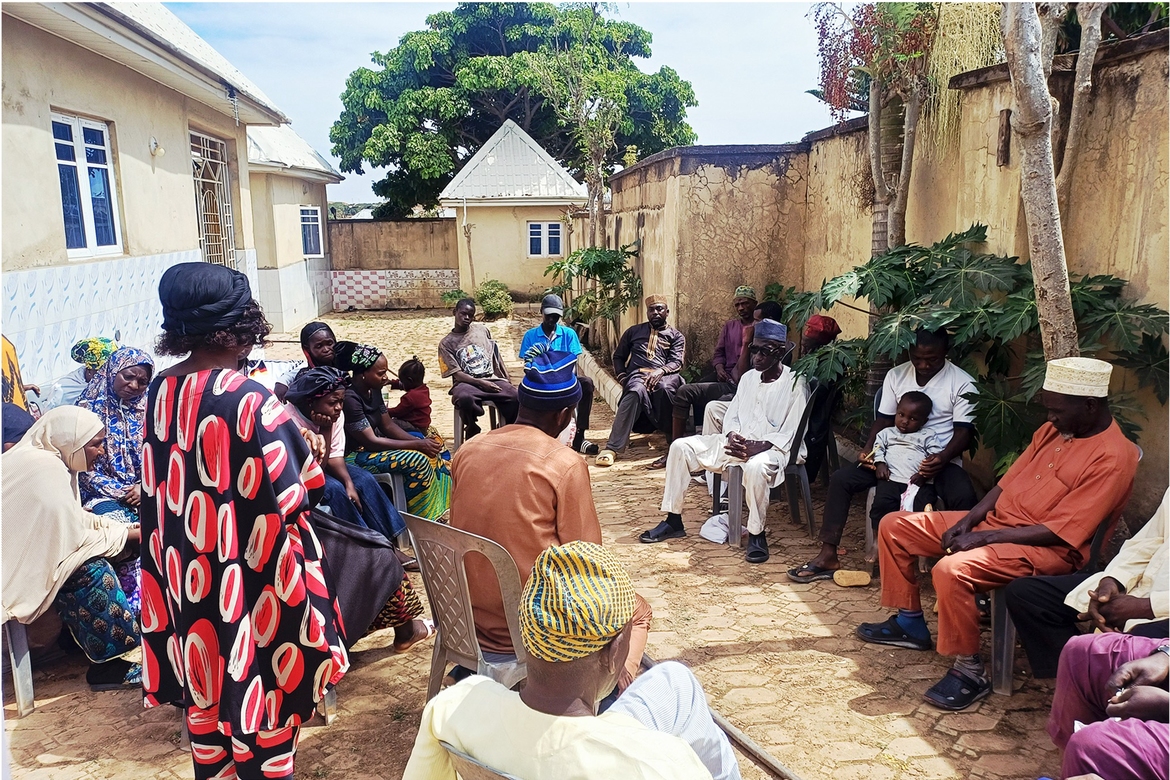
Dialogue and discussion between members of separate religious communities in Nigeria.
In Nigeria, decades of violence and tensions have created deep religious fault lines and distrust between Christians and Muslims. Particularly in the states of Kaduna and Plateau, communities that once lived side by side now live with fear, segregation, and a constant sense that even small incidents could trigger violence.
In this intense political landscape, it is often the women who carry the greatest burdens of the conflict. But it is also women who create opportunities for growth and hope.
Daring to take a risk in the name of bridge-building
“Mary” is a Christian woman from the Gurum region in Plateau State, Nigeria. She grew up with a childhood shaped by repeated acts of violence between religious groups and decided that she would not accept fear as the force that defined the future. She moved her tailoring shop from a Christian area to a Muslim neighborhood, an action that many of her family and friends felt were both unwise and dangerous. The risks were obvious. What if she was attacked? What if the shop was plundered or even destroyed?
But: Mary was met with kindness and warmly welcomed in the community. Her shop soon became a safe, shared space for daily interactions—a place where Christians and Muslims could slowly begin to build relationships, and rebuild trust. As the business grew, Mary took on two orphaned Muslim girls and trained them in tailoring garments. Her actions have not only given the girls hope for their own futures, but showed the community that it is possible to build bridges between the two faith groups.
Peacebuilding in everyday spaces
In formal peace negotiations and political speeches, day-to-day peacebuilding initiatives like Mary’s are rarely mentioned. Yet they succeed precisely because they take place in everyday spaces: at home, in the marketplace, or in the classroom. In these spaces, where social barriers are lower, women are particularly well positioned to create a positive change.
A Christian schoolteacher in Nigeria was concerned that the next generation would inherit the hatred, fear and use of violence widespread between the religious groups in her community. So, she invited some Muslim women in the community to start joint activities for their children. At first, her initiative was met with distrust. But as the children developed strong friendships across the religious divides, the attitudes of the parents started to change. What began as a small initiative to let children play has begun softening hearts that had been hardened by decades of distrust.
A Christian widow who lost her husband in violent conflict, today leads an interfaith support group for widows. She helps them rebuild their dignity and find new purpose, despite their loss. Her own suffering created space for healing, and eventually hope, despite religious differences.
These courageous initiatives, for peacebuilding and co-existence, can prevent possible future persecution and create safety for Christians who live in places where they are a minority – both in rural Nigeria and other places.
Active agents, not only survivors
In contexts where religious freedom is under pressure, women generally face more obstacles than men when living out their faith. They experience discrimination and attacks both because of their religion and for their gender. Women also face more restrictions than men when it comes to dress code, freedom of movement, access to education or employment or equal treatment before the law.
When we think about women living in contexts of persecution we often tend to focus on their suffering. But describing them only as victims of restrictions and limitations does not do their stories justice. The truth is that women across the globe are among the most determined, resourceful and effective advocates for peace and freedom of religion. Even in the most restrictive environments, they find creative ways to live out their faith—and help their communities.
While injustice against women deserves awareness, it is unfair to reduce persecuted women to victims only. More often than not, they are active agents, showing extraordinary creativity and courage, creating space for action where there seems to be none.
Faithful risk-taking in places no one else can go
Women’s contributions to peace and global freedom of religion is not a side story. It is one of the most transformative movements in the global church today. Their work rarely make the headlines – yet their actions change lives and build bridges, often proving far more successful than politicians, dignitaries, or even religious leaders.
These women do not live out their faith privately and quietly. Faith has rather become a source of immense courage, to do what others think is stupid, dangerous or even impossible. Their faithful risk-taking creates peace in places and circumstances that are out of reach for nearly anyone else. And they do so without important titles, dedicated budgets or impressive conference speeches with officials and dignitaries listening.
Written by Vija Herefoss and Kjersti McElwee.